
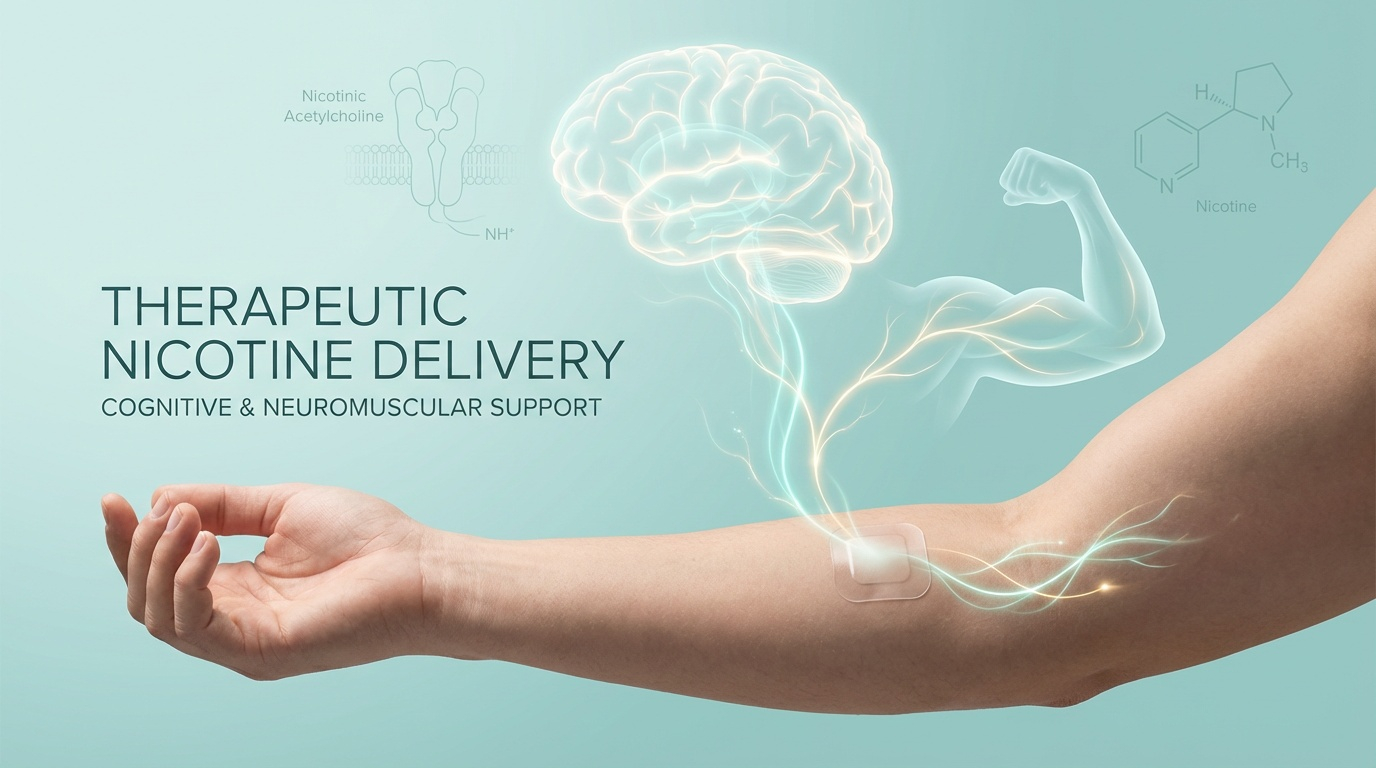
Nicotine is not a substance many would associate with better health. We have been thoroughly trained to associate nicotine with tobacco, tobacco with smoking, and smoking with all kinds of health problems. It will come as a surprise to most people, I suspect, to learn that in fact there is a large body of literature on the therapeutic aspects of nicotine as a therapy.
Nicotinic Acetylcholine Receptors—The Biology Behind Nicotine
Signaling molecules in the body do their work by binding to receptors that sit on the surface of cells. Each molecule has a unique receptor it will bind to. One very important kind of receptor found throughout the body, but especially in the brain and in muscles, is called a nicotinic receptor. More specifically they are called nicotinic acetylcholine receptors, because nicotine and the neurotransmitter acetylcholine both bind very strongly to the same receptor.
Cognitive & Muscular Implications of Receptor Activation
When acetylcholine binds to this receptor in the brain it facilitates memory formation and retention, concentration, and mood. Upon binding these receptors in muscles acetylcholine enhances muscle contractility, strength, and endurance.
Why Nicotine Can Mimic—and Extend—Acetylcholine’s Effects
Nicotine has many of these same effects and it binds to the receptor almost as strongly as does acetylcholine. Not only that, but it doesn’t break down as quickly, so it activates the receptor longer. Because of this it has a more sustained impact on the brain’s dopamine production, which accounts for the feeling of pleasure and “reward” it induces and thus its potential to be addictive.
Extracting a Compound, Not a Vice
Think of nicotine as a potentially therapeutic molecule that can be extracted from tobacco (and, in lesser amounts, from other plants) in the same way that curcumin can be extracted from turmeric or berberine can be extracted from Oregon grape.
Separating Nicotine from Tobacco-Related Risks
Tobacco has hundreds of chemicals in it that can cause cancer. Nicotine, though, isn’t one of them. Many studies have shown that, when delivered topically (and not via inhalation), nicotine has the potential to be quite beneficial in treating several health conditions. I’ll describe a few here, though keep in mind this is not comprehensive.
Nicotine Patch Protocol for Long COVID & Vaccine-Related Injuries
The most dramatic benefit I have personally witnessed related to therapeutic nicotine (the “patch protocol”) is in the treatment of long Covid and/or vaccine-related injuries. The spike protein, whether produced by natural infection or via mRNA vaccination, binds to those nicotinic acetylcholine receptors. The problem is that, instead of stimulating the receptor, it actually blocks it from doing its job. This is one reason that prominent symptoms of both long Covid and vaccine injuries include brain fog, muscle weakness, and exercise intolerance. If spike proteins are blocking those receptors, acetylcholine can’t do what it is intended to do.
Nicotine binds to that receptor much more strongly than the spike protein does. Introduced into the body topically, nicotine can dislodge the spike proteins, reactivate the receptor, and sometimes bring about a dramatic and permanent resolution of those spike-induced symptoms. Appropriate dosing with the nicotine patch is very important, and it is doubly important to be doing spike detox therapies concurrently so that those mobilized spike proteins are degraded and eliminated before they can bind again.
Cognitive Support & Memory Enhancement
Another condition with solid published evidence of benefit with transdermal nicotine is cognitive impairment and memory issues. Several studies have shown that application of a transdermal nicotine patch for up to 6 months resulted in significantly enhanced cognitive performance. Importantly, there was no sign of withdraw upon stopping the therapy, strongly suggesting that the lore of nicotine being “more addictive than heroin” might be more about discouraging smoking than it is about accuracy.
Potential Role in Autoimmune Conditions
In addition to the uses of the therapy mentioned here, I also believe, based upon its effects on the immune system, it is highly indicated in several types of autoimmune disease, though certainly not all autoimmune diseases. There are many autoimmune diseases I believe would be made worse by nicotine therapy. While the therapy is widely available and could benefit millions of people, it is important to utilize it under the guidance of someone who understands when it is, and most importantly when it is not, appropriate.
Safety, Indications, and Next Steps
As with any therapy, nicotine has its clear indications, it has strong clinical evidence of being beneficial for many, and I believe the safety profile for it is quite good. If you would like to have a conversation to find out if transdermal nicotine could be beneficial for you set up a consult: 503-719-4806, drnigh_info@gregnigh.com, or https://gregnigh.com/schedule. Mention this article to get 15% off your scheduled consultation.


