August 2026 · Newsletter
Rethinking "Adrenal Fatigue"
There are some phrases that show up often in the world of alternative health that I'm a little skeptical to embrace. "Adrenal fatigue" is one of them, a phrase I think is overused and risks hiding the real underlying cause(s) of fatigue.
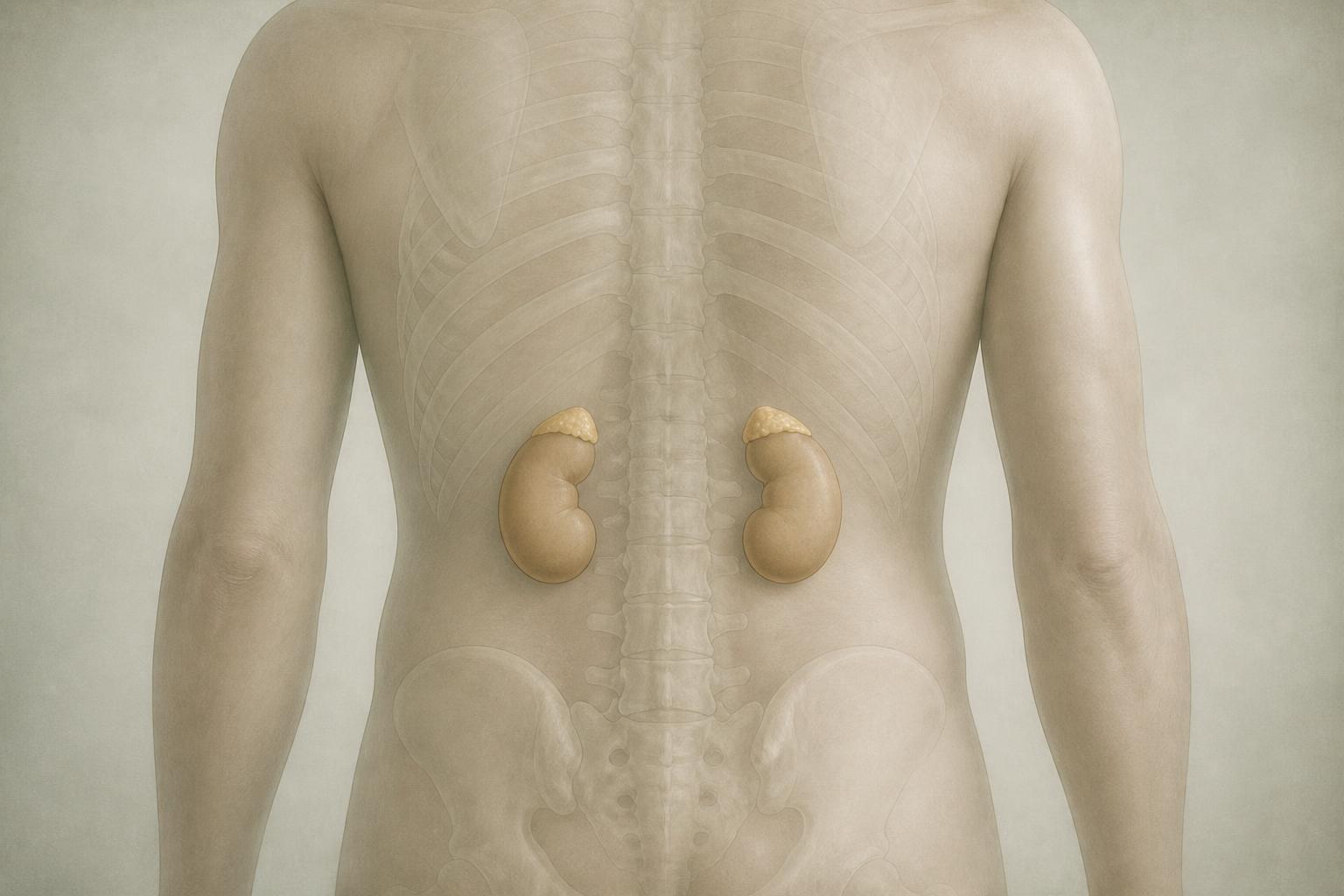
It is not uncommon at all for new patients to volunteer that they have been diagnosed with adrenal fatigue by a prior provider or by Dr. Google.
The phrase implies that the adrenal glands, little "hats" that sit on top of each kidney, are unable to produce adequate amounts of cortisol. That, it is supposed, is often why chronically fatigued people feel fatigued. But there are several important questions that need to be sorted out, even with a patient who has a salivary cortisol test showing low cortisol output.
A diagnosis conventional medicine doesn't recognize
The conventional medical world doesn't recognize "adrenal fatigue" as a legitimate diagnosis. A 2016 review of the published literature reached a conclusion that leaves little room for interpretation because the spoiler is baked right into the title of the paper: Adrenal fatigue does not exist: a systematic review.
The publication is not just an attempt to discredit a diagnosis commonly used in the alternative health world. They reviewed 26 individual studies that measured various lab values: morning serum cortisol level, morning salivary cortisol, ACTH challenge test, and others that are intended to assess and quantify some aspect of adrenal function. They included in this review the tests naturopaths commonly use to diagnose adrenal fatigue, the salivary 4-spot diurnal test.
What they found was that many patients with fatigue have normal adrenal function tests, and many patients without fatigue have low (or elevated) adrenal function according to the same kind of tests. That's not a strong argument for the sensitivity of the tests to detect abnormal adrenal function. In fact, looking at over two dozen different tests used to assess adrenal function, more than half the time most tests fail to detect a difference between fatigued and healthy patients.
The research behind the "stages" doesn't exist

I have run dozens of salivary cortisol tests on patients over the past few decades under the assumption, widely promoted within the community of "experts" in the functional testing world, that salivary cortisol and DHEA tests tell us something meaningful about adrenal function. The lab reports we get with the results even have charts to let us know what particular "stage" of adrenal fatigue a patient might be in. Feeling increasingly skeptical, I decided to look at the research behind the assertion that various shifts up/down in salivary cortisol and DHEA can be mapped onto various stages of adrenal fatigue.
That research doesn't exist.
The saliva testing labs themselves, on their Publications or Research pages, have a list of published studies that were conducted on very specific populations of people. For example, several studies on salivary cortisol were conducted on people with a potentially fatal elevation of cortisol called Cushing's disease. Other studies are on healthy men before/after resistance exercise. There is little that can be inferred about salivary cortisol in fatigued people based upon results obtained from those studies. There simply are no studies — not a single one — that tracks salivary cortisol and DHEA over time, in any demographic, and maps out corresponding stages of impaired adrenal function.
Does this mean I think all salivary testing is garbage? I can't say that, any more than I can say it is highly reliable for assessing adrenal status. There is no data on which to make that assessment.
The seduction of the test result
What I think is that the medical world is becoming increasingly reliant on tests to tell us what is wrong with our patients. I think this is especially true within the realm of functional medicine. Tests have an air of being objective, scientific, and authoritative. I suspect patients and ordering physicians alike assume that tests are accurate, reliable, and validated. In fact there is wide variation between tests in all three of these qualities.
Don't get me wrong. I'm a big fan of using tests to better understand underlying imbalances in patients. But it is important for ordering physicians to understand that hsCRP is telling me about inflammation much more reliably than salivary cortisol is telling me about adrenal function.
A better way to sort out fatigue
What is a better way to assess adrenal function as it might relate to fatigue? I think practitioners asking a series of focused questions can distinguish between underlying hormonal causes of fatigue (adrenal, thyroid, sex hormones, etc.) at least as reliably as salivary cortisol testing.
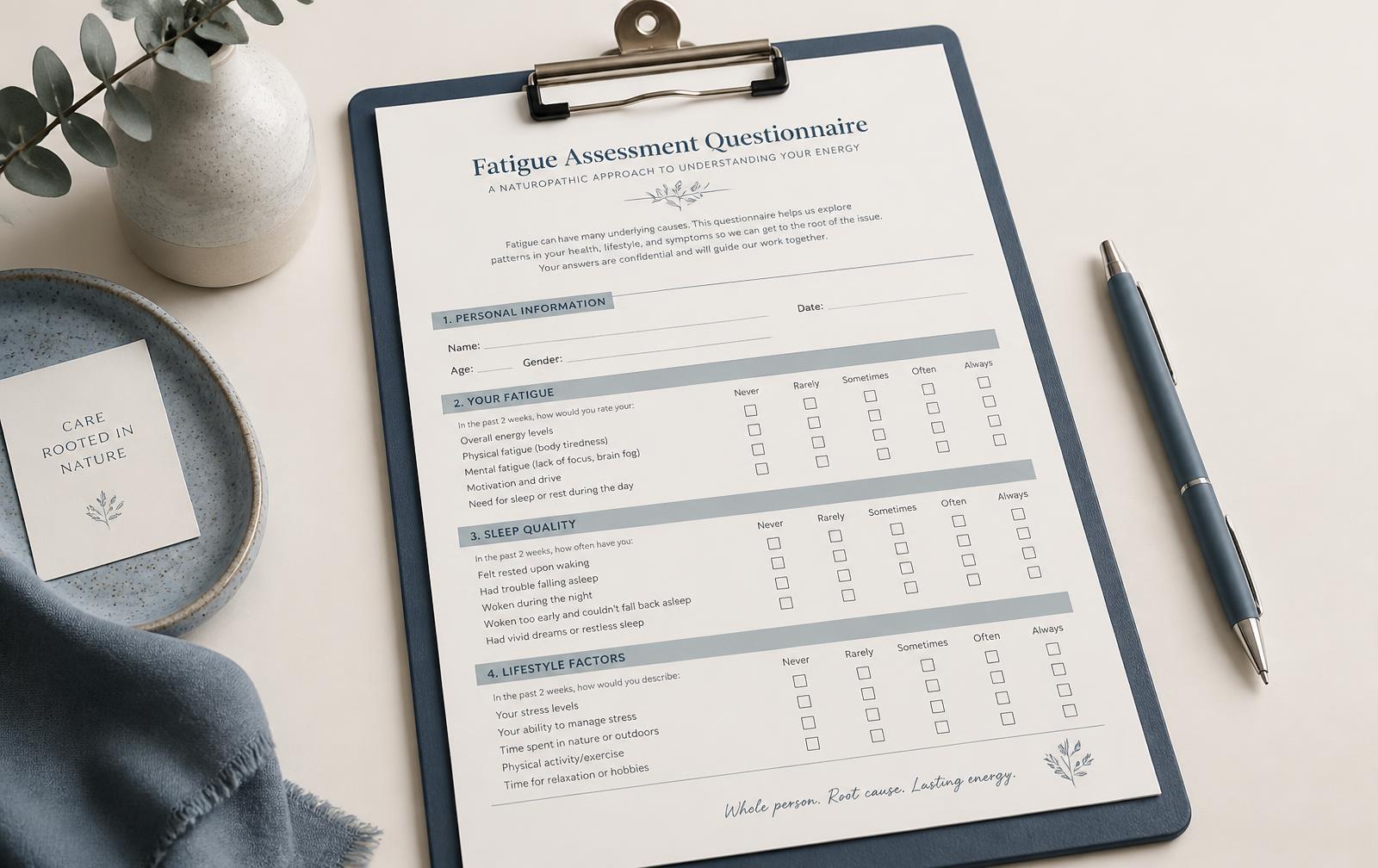
What I learned in my research for this article inspired me to create a very comprehensive questionnaire to help distinguish between multiple underlying possible causes of fatigue. Answers to 78 questions are analyzed to determine if fatigue is most likely due to hormones, chronic infections, metabolic issues, or other causes. Schedule with me if you want to get access to this assessment: gregnigh.com/schedule-now, 503-719-4806, or email Lisa at drnigh_info@gregnigh.com. Patients in Rhode Island can schedule with me through rhodeislandnaturopathic.com.
Share this article
- Chronic Fatigue
Related topics from Dr. Nigh
- December 2025Saffron for Stress Reduction: Natural Mood SupportDiscover how saffron helps reduce stress, anxiety, and depression naturally. Learn effective doses and benefits with Dr. Greg Nigh.
- September 2026Optimizing Your Workout Time: The P.A.C.E. ProgramHow progressive exertion and recovery intervals can build cardiovascular adaptability in a compact daily workout.
- September 2026Glucosepane: One of the Most Important Molecules You’ve Never Heard OfHow glucosepane may connect carbohydrate intake, deuterium management, collagen stiffness, and connective-tissue health.
- September 2026What “Take With Food” Really MeansHow to time fat-soluble supplements during a restricted eating window, plus the important exceptions to the rule.
Discussion
NOTE: Comments on blogs, once approved, become viewable to the public. If you would like to comment directly to Dr. Nigh privately in response to this blog post please email him directly by clicking here.
Comments are moderated. Your email address will never be shown publicly.
Loading comments…